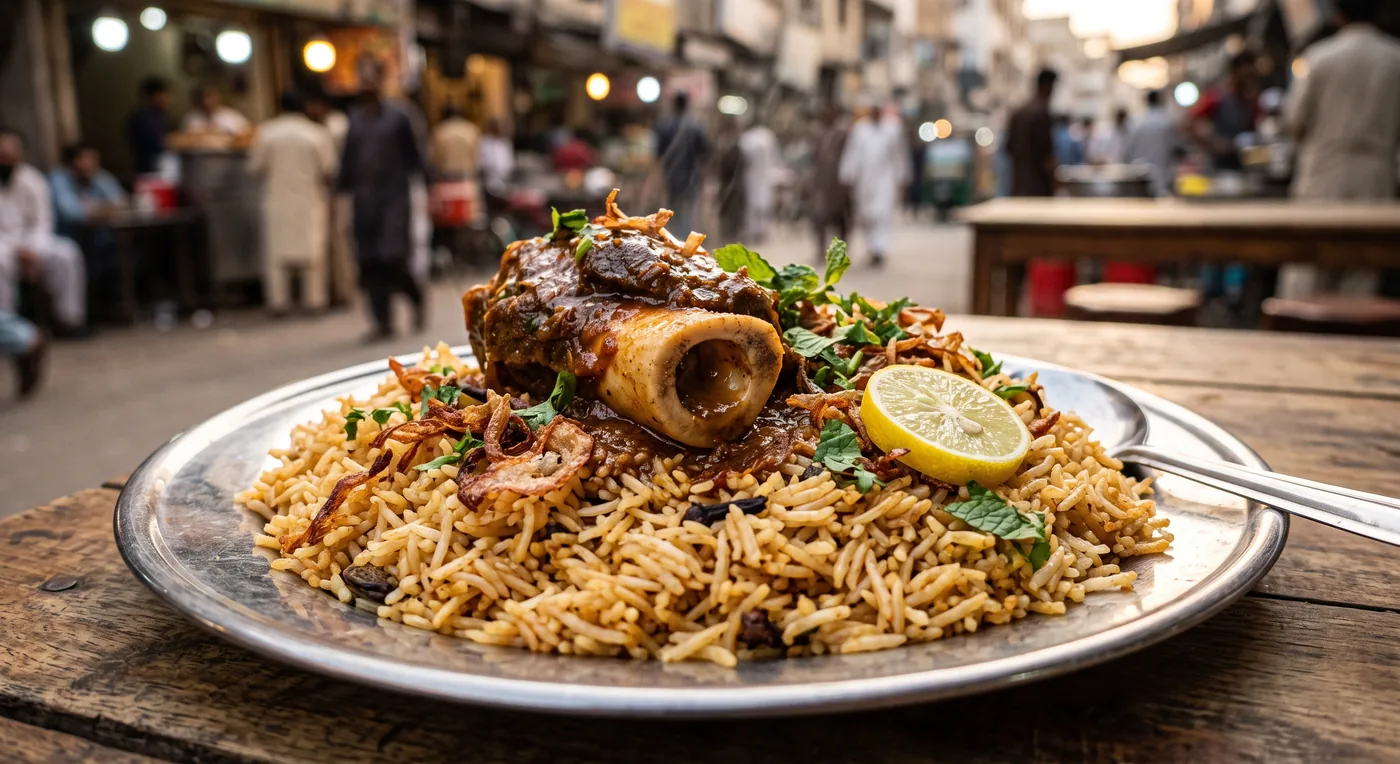
Ask people why Ghousia Nalli Biryani tastes the way it does and most will point straight at the marrow bone. That's fair, but it's only part of the answer. Underneath the obvious showpiece is a set of small, deliberate decisions — about heat, about rice, about spice ratios — that have to line up exactly right for the dish to work at all. Get any one of them wrong and the plate falls apart: the marrow turns rubbery, the rice turns to paste, or the masala drowns out everything it's supposed to be supporting. Here's what's actually happening behind the counter.
Low Heat, Long Patience: What Happens to the Marrow
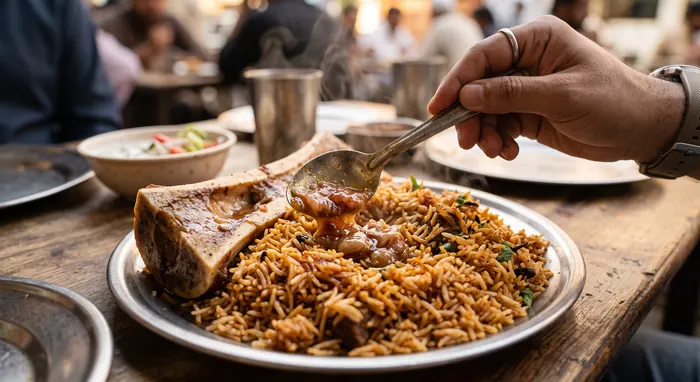
Bone marrow doesn't become soft because it's cooked hard — it becomes soft because it's cooked slowly. The nalli bones go into the degh early and sit through a long, gentle simmer alongside the beef, never at a rolling boil. Rush that process with high heat and the marrow seizes up and turns chalky instead of melting into the rich, spoonable texture people line up for. The payoff only shows up at the very end, when a bone held up to the light gives way at the lightest push — that's the test the kitchen actually uses, not a clock.
Grain by Grain: Getting Basmati to Stay Separate
The rice is just as unforgiving. Basmati has to be parboiled to a precise point — soft enough to finish cooking during the dum, firm enough that each grain holds its shape instead of clumping. Too little and the rice stays hard at the center; too much and the whole pot turns sticky the moment it's layered with the gravy. What actually separates nalli biryani from an ordinary plate of rice and meat comes down to exactly this — grains that stay distinct even after absorbing all that spice and marrow fat, so every spoonful still has texture instead of turning into a mash.
The Masala Has to Support the Marrow, Not Compete With It
A beginner's mistake with bone marrow is over-seasoning it, because rich ingredients can handle a lot of spice and still taste balanced. Ghousia's masala is built to go the other way — deep and warm, built on slow-fried onions and whole spices, but held back just enough that the marrow and the beef shanks stay the center of attention rather than getting buried. The chili brings heat without taking over, and the gravy is reduced until it clings to the rice instead of pooling at the bottom of the plate. That restraint is harder to get right than simply adding more of everything.
Repeating It Perfectly, Every Single Day
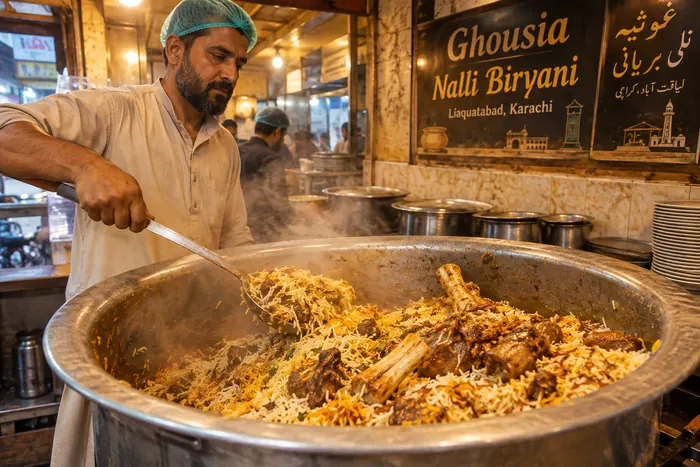
None of this means much if it only works once. The real test is doing it the same way every single day, at the same hours, with the same results, whether it's a quiet Tuesday afternoon or a packed Friday rush. A look inside the kitchen shows how that consistency actually gets maintained — fresh batches, the same degh, the same hands checking the marrow and the rice before anything goes out to a customer. That daily discipline, more than any single ingredient, is what keeps regulars coming back to the exact same plate they remember from the first visit.
Frequently Asked Questions
Why does the marrow sometimes taste richer on one visit than another? It shouldn't by design — the kitchen aims for the same slow-cook process every day, though natural variation in the bones themselves can shift richness slightly from batch to batch.
Is the biryani very spicy? It's warm and layered rather than sharply hot — the masala is built for depth, not just heat, so most first-timers find it manageable.
Can I order ahead to make sure the marrow is fresh off the degh? Yes — message on WhatsApp to check today's timing and place your order in advance.